 Call Us: 0800 999 0200

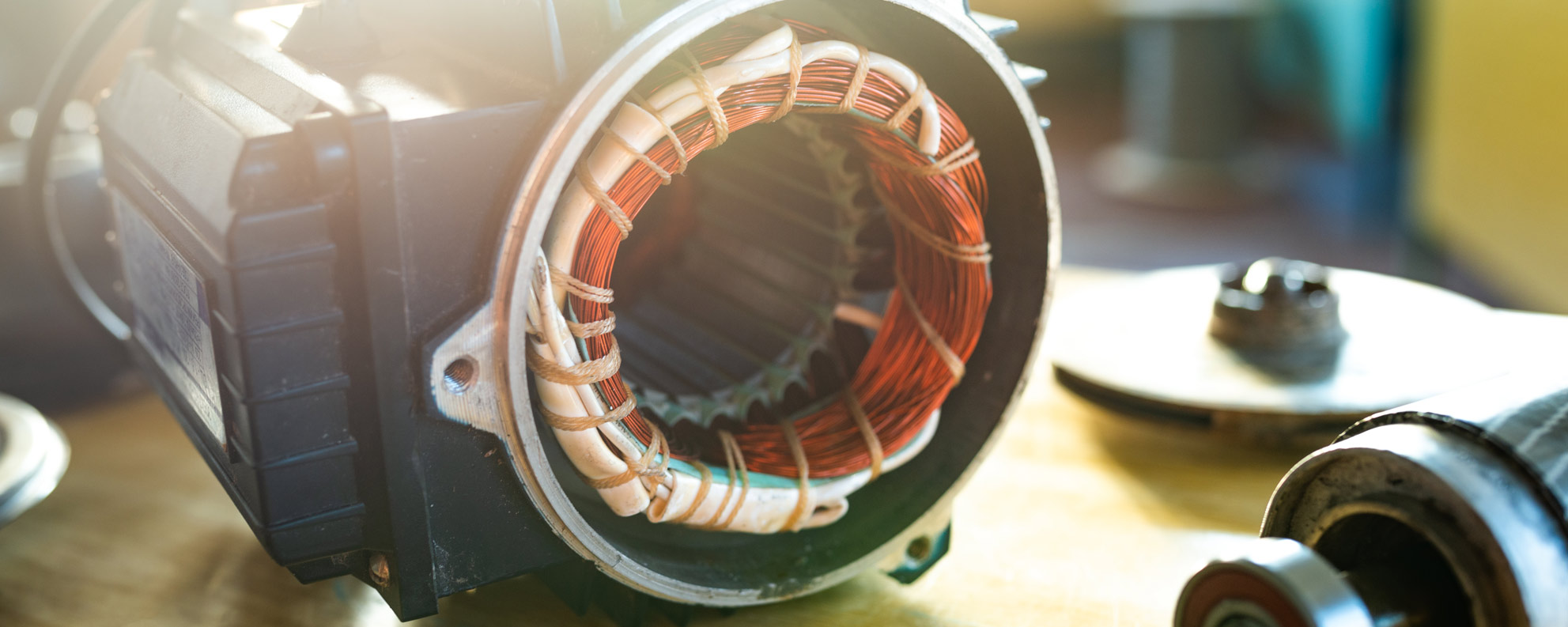
When an electric motor breaks down, one of the first questions is whether it’s worth repairing or whether it’s time for a replacement. The answer isn’t always as straightforward as we would like, though. Rewinding can bring a damaged motor back into service, while a new motor may offer better efficiency, improved reliability, or lower running costs over time.
The right decision depends heavily on the condition of the motor, the cost of each option, and how important it is for you to get your equipment running again. Here’s what you should be considering before committing to a repair or replacement.
What Is Electric Motor Rewinding?
Electric motor rewinding involves removing damaged windings and replacing them with new ones. These windings carry electrical currents and create the magnetic fields that then make the motor work. Over time, heat, moisture, electrical faults, and general wear can damage their insulation, which will eventually cause the motor to perform poorly or even stop working entirely.
During a rewind, a specialist will dismantle the motor, remove the old windings, and check the remaining components for any damage. New windings are then installed to the right specifications before the motor is put back together and tested.
Rewinding can be a sensible way to extend the working life of a motor, especially if the main components are in good condition. It is also worth considering if the motor is expensive to replace, or a suitable replacement is hard to find.
Common Signs An Electric Motor May Need Rewinding
A motor doesn’t always fail without some sort of warning. You might notice that it runs hotter than usual, that it struggles to start or repeatedly trips an electrical protection device. Or, if you notice a burning smell or any visible signs of overheating, this can also indicate a problem with the windings.
However, these don’t automatically mean that the motor needs rewinding. Worn bearings, poor ventilation, overloading, and even electrical supply problems can all cause similar issues.
If a motor starts acting differently, it’s worth having it looked at before you decide what to do next. Figuring out the cause of the fault helps avoid paying for a rewind when another repair, or a replacement, would be a better option.
What Does Electric Motor Replacement Involve?
Replacing a motor means removing the existing unit and installing another with the correct specifications for the application. This might be a direct replacement, or some people might take the opportunity to upgrade to a newer, more energy-efficient model.
Before choosing a replacement, check the motor’s power rating, voltage, current, speed, shaft dimensions, and mounting arrangement, as the new mount needs to suit the equipment it drives and the conditions at which it operates.
Although replacement can involve a higher initial cost, it may be the better option if the existing motor has any sort of extensive damage, if it breaks down all the time, or if it no longer meets the application’s requirements. A new motor can provide improved efficiency and extend manufacturer support.
Motor Rewinding vs Replacement: Key Differences
The main difference is pretty simple: rewinding repairs the existing motor, while a replacement involves buying and installing a new one.
Rewinding may cost less upfront and allows you to keep a motor that already fits what you need it for. This can be useful for specialist machinery or older installations, where sometimes finding a compatible replacement isn’t easy.
A new motor, on the other hand, can offer better efficiency, or a more practical long-term solution if the existing unit is nearing the end of its life.
Neither option is automatically quicker or cheaper than the other. A straightforward rewind might be completed sooner than sourcing a replacement, but a readily available new motor could get your equipment running again faster than a repair.
Factors To Consider Before Rewinding Or Replacing A Motor
Age And Overall Condition Of The Motor
An older motor isn’t necessarily one that needs replacing. If its main components remain in good condition, and it has been reliable throughout its working life, rewinding it could be worthwhile.
The important thing is to think beyond the windings. Damage to components like the rotor, stator, core, bearings, or others can make a rewind less effective. If several major components need attention, the cost of putting everything right may be better spent on a replacement in the end.
Cost Of Rewinding vs Buying A New Motor
Cost is often the factor that people base their decisions on, but it’s worth comparing the full figures instead of just the repair bill and purchase price.
A rewind quote should set out the work and any additional repairs that need doing. For a new motor, remember that you should include costs such as delivery, installation, alignment, and any changes that might be needed to your existing set-up.
Energy Efficiency And Long-Term Running Costs
The purchase price is only part of what a motor costs. If it runs for long periods, electricity consumption can make a huge difference over its working life.
A properly carried out rewind can maintain a motor’s efficiency, provided recognised repair practices are followed, and the core remains in good condition. However, it’s true that rewinding doesn’t automatically make an older motor more efficient.
A newer, higher-efficiency motor may use less electricity, which can offset some of the initial cost. But before deciding, you need to look at all of the facts.
Downtime And Business Interruption
If a motor failure has stopped your production process, time is just as important as money. If everyday equipment is not in use, it can mean lost output, delayed orders, and even additional labour costs.
Ask how long a rewind is likely going to take, and whether a suitable replacement is available. A specialist motor may be quicker to repair than replace, while a standard motor that is in stock often could be installed quicker than a rewind could be done.
Motor Size, Type And Availability
Finding a replacement isn’t always as simple as matching the power rating. You need to consider things like frame size, shaft dimensions, mounting arrangements, and more. For older motors, a direct replacement might be tough to source, and rewinding can allow you to retain the existing motor, meaning you can avoid changes to the machinery around it.
For more common motor types, a suitable replacement might be easily available.
Environmental Impact And Sustainability
Rewinding keeps an existing motor in service and can reduce the need for new materials. If the motor is otherwise sound, repair may be a practical way to extend its useful life.
When Is Motor Rewinding The Better Option?
Rewinding is worth considering when the damage is mainly electrical, and the rest of the motor seems to be in good condition. It can be especially useful when:
- The repair cost seems better than buying a new unit
- The motor is expensive or hard to replace
- The dimensions and mounting arrangement suit the machinery
- A specialist can complete the work to the standard required
- The motor has performed reliably and meets requirements still
A professional inspection is important before committing to a rewind. It helps to determine whether the motor’s core and mechanical components are sound enough to justify the repair.
When Should You Replace An Electric Motor Instead?
Replacement may be the better option if a motor has extensive damage, repeated failures, or costly mechanical issues. It’s also worth thinking about if a newer model offers better energy efficiency or the existing motor no longer meets your needs.
Compare the full cost of repair and replacement, including all of the add-ons, before you decide what is right for you.
How To Calculate Whether Rewinding Or Replacement Offers Better Value
It would be ideal to get a quote for rewinding and compare it with the total cost of a replacement. Make sure that you include things like potential downtime, commissioning, and installation in your final numbers here.
If a new motor is more efficient, work out the annual electricity savings to discover how much you could save.
Why Professional Motor Assessment Matters
A professional assessment can help identify winding faults, insulation issues, bearing wear, and core damage. All of this helps to establish whether rewinding is worthwhile. It also helps to uncover the cause of the failure. Issues such as overloading should be addressed asap.
Frequently Asked Questions
Is it cheaper to rewind an electric motor or replace it?
Rewinding may be cheaper for large or specialist motors, while replacing a small, standard motor can be more cost-effective.
Does rewinding an electric motor reduce its efficiency?
Not necessarily. A rewind completed to the correct standards can maintain efficiency if the motor’s core is in good condition.
How many times can an electric motor be rewound?
There’s no fixed limit, as it all depends on the condition of the motor, the repair history, and the suitability.
How long does electric motor rewinding take?
Turnaround depends on the size of the motor, damage, and the availability of parts. Ask your repair specialist for an estimated timeframe.
Making The Right Choice For Your Electric Motor
Rewinding can extend the life of a motor in good condition, while replacement might be better for those that are badly damaged or unreliable. Compare costs, energy use, and downtime, and then seek professional advice to choose the best and most cost-effective solution for your business.


