
Inverters
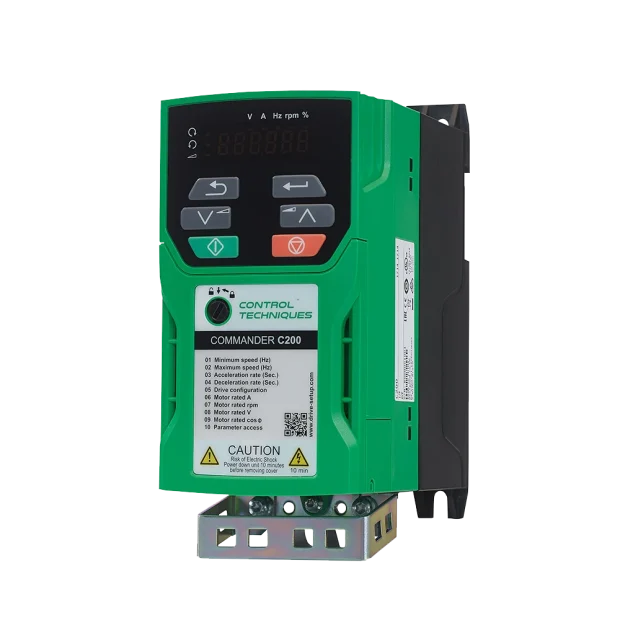
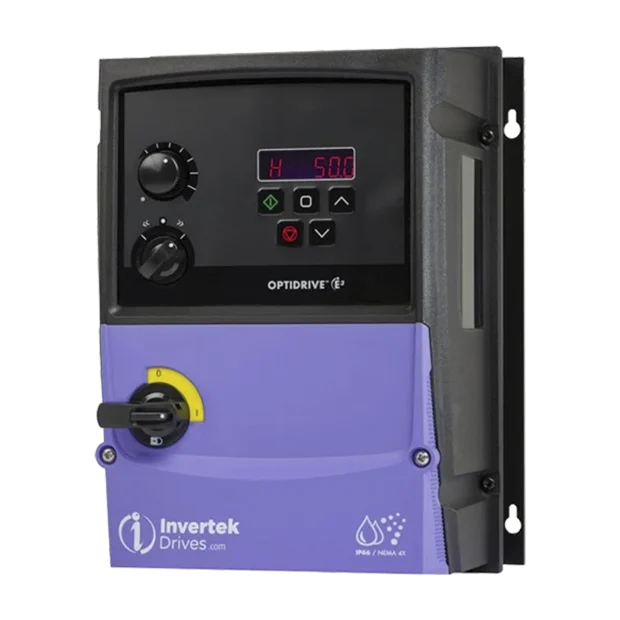
Shop variable frequency drives (VFDs) for precise AC motor speed and torque control. RJW Motors and Inverters make it easy to find units that give you precise AC motor speed and torque control. We supply single- and three-phase VFDs from top brands like Control Techniques and Invertek. You can get them in IP66 washdown ratings and IP20 panel mount, with free UK mainland delivery, rapid despatch, and a 30-day return guarantee. If you’re not sure which motor drive or drive unit is right for your motor, provide us with the nameplate details, and our team will size it up for you.
What is a variable frequency drive?
A variable frequency drive (also called an inverter drive or VFD) allows you to change the torque, direction, and speed of an AC motor simply by varying the frequency and voltage supplied to it. These pieces of equipment are able to achieve this by using a special staged process:
- A rectifier converts the incoming alternating current supply to direct current.
- A direct current bus smooths and stores it.
- An inverter switches the direct current back to alternating current at the frequency your application needs.
What this means in practice is that you get a motor that can run at virtually any speed between standstill and full rated. It can also accelerate and decelerate smoothly, which may be superior for your production processes, while only drawing on the power that it actually needs to supply that motion.
You can get a more in-depth technical view of what this means by reading our guide: What is a variable frequency drive?
RJW Motors & Inverters is a supplier you can rely on
RJW Motors & Inverters is part of RJW Engineering, a Manchester firm with over 80 years in the industry. We work with some of the country's biggest companies who trust us to supply them with high-quality motors and equipment.
We are relied upon for the following reasons:
- Source non-standard units to order
- Identify replacements for failed drives or motors based on the nameplate details alone.
- Large stock of motors and inverters and offer fast, free delivery across the UK mainland.
- Tracked packages with a 30-day returns guarantee.
- Manufacturer-trained technical support for expert advice - no call centres.
- Installation, repair, and inverter maintenance.
Applications for variable frequency drives
VFDs can be used in multiple applications, including:
- HVAC plants where building load varies through the day and year
- Machine tools that require varying feed and spindle speeds
- Mixers and agitators that require different processing speeds for varying recipes and drinks
- Chemical and food production
- Conveyors that need controlled acceleration to stop product shifting or spilling
- Compressors that only require part-load running some of the time
- Pumps that can match flow demand in building services and water treatment facilities
- Fans and extractors that can track ventilation and dust collection demands
How to choose a variable frequency drive
Choosing a variable frequency drive starts with the motor nameplate. The drive needs to have a kW rating that equals or exceeds the motor's rating, and the voltage and phase need to match. In the UK, three-phase supply is 400 V, but single-phase supply is 230 V. From there, you'll need to consider:
- the environment where the motor will operate
- the type of load it will receive
- whether it needs built-in EMC filtering
If you're stuck, you can call our team on 0800 999 0200 and give us your motor details.
Our manufacturers
Invertek
Invertek is a global leader in the design, manufacture, and sale of sophisticated inverters. The company's general-purpose drives control electric motors, making them more efficient while enhancing their performance. Invertek now sells products in over 80 countries and has a strong international presence.
Control Techniques
Control Techniques is a global leader in developing automation and motion control systems. It is known for building some of the highest-quality and most innovative products built specifically for cross-industry applications. Systems are designed to be functional and easy to use, with advanced motor control, energy efficiency, and a flexible application range.
Frequently Asked Questions
What is the difference between an inverter and a VFD?
There is no difference, just different terminology. Variable Frequency Drive (VFD) is the technical term; inverter is what everyone calls them in practice.
Both convert fixed mains frequency into a variable output to control motor speed. Whether you see an Invertek Optidrive E3 labelled as an inverter or VFD, it performs the same function.
How do I select the right VFD for my motor?
Check your motor nameplate for kW rating, voltage, and phase type first. Match these exactly to VFD specifications - a 2.2kW motor needs at least a 2.2kW drive.
Environmental conditions determine enclosure rating: IP20 for clean panels, IP66 for washdown areas. Application type matters too - pumps need different control modes than fans or conveyors.
Why match the voltage ratings between the VFD and the motor?
Mismatched voltages destroy equipment rapidly - a 400V drive outputting to a 230V motor burns windings, and 400V motors on 230V drives have insufficient torque and overheat.
Supply voltage must also align: UK three-phase runs 400V, single-phase uses 230V. The Optidrive E3 three-phase accepts 380-480V input, covering standard UK industrial supplies perfectly.
Can a single-phase VFD drive a three-phase motor?
Not properly — you'll get poor performance and early failure. Single-phase drives output single-phase power regardless of the motor type connected.
Some converters claim to run three-phase motors from a single-phase supply but deliver reduced power and reliability. Buy the right equipment initially instead of bodging incompatible combinations.
What are the benefits of using a VFD?
Energy savings pay for drives quickly — running pumps and fans at 80% speed uses half the power. Soft starting eliminates mechanical shock and electrical spikes during motor startup.
Process control improves dramatically with variable speed instead of throttling valves or dampers. Reduced wear on mechanical components extends equipment life significantly beyond fixed-speed operation.
Single-phase inverter vs three-phase — what's the difference?
Power capacity separates them — single-phase handles up to 3kW on a 230V domestic supply. Three-phase systems manage much larger loads using 400V industrial power, with better efficiency throughout.
Installation differs too: single-phase plugs into standard sockets, whilst three-phase needs proper industrial wiring. Cost and complexity increase with the three-phase but so does capability and reliability.
Where can I purchase high-quality VFDs?
RJW Motors and Inverters stock Invertek Optidrive E3 and Commander C200 ranges in both single and three-phase versions. Ring 0800 999 0200 for expert sizing guidance.
Download technical data from our website. Email [email protected] with your motor details for accurate quotations and availability.
Not sure what
you're looking for?
Contact our experienced technical team
and we can help you find what you need.
 Contact Us at 0800 999 0200


