Call Us: 0800 999 0200
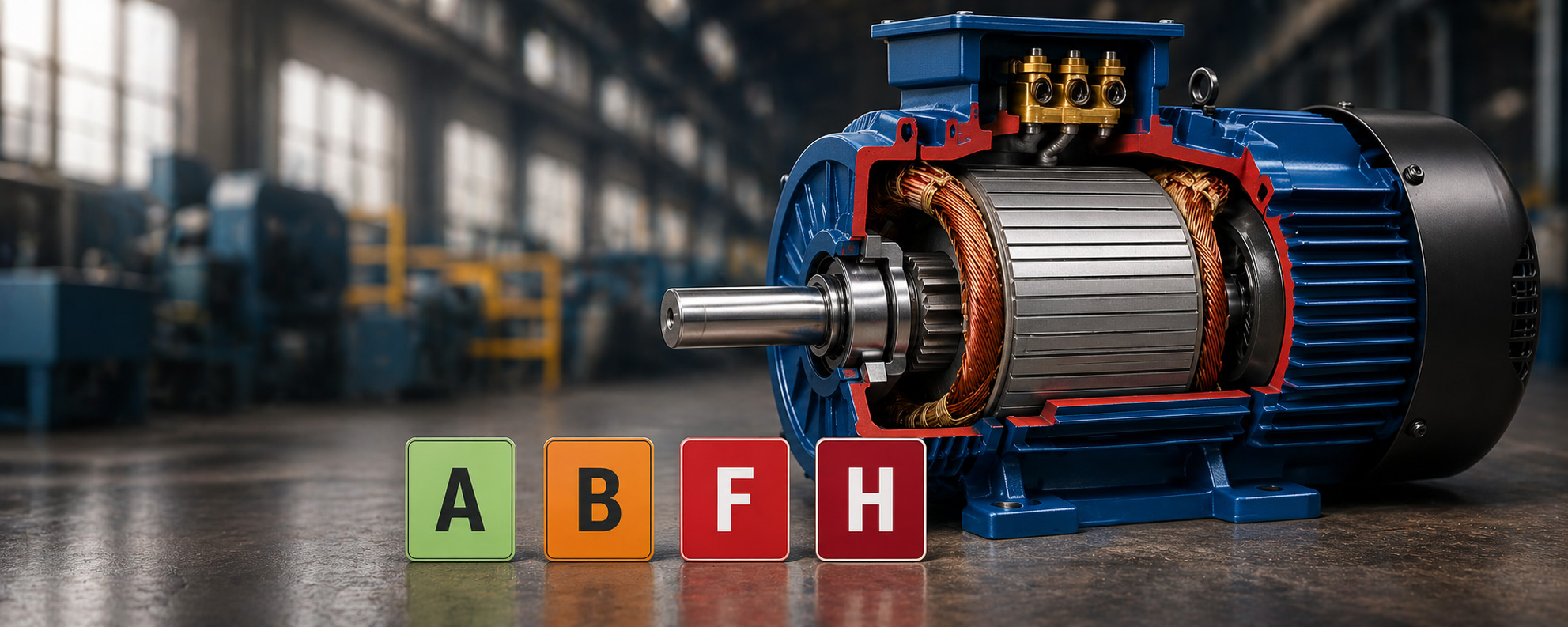
When selecting an electric motor, it’s easy to focus on its power, speed, and efficiency; however, one of the most overlooked factors is its insulation class. This specification determines how well the motor can handle heat, which directly influences its lifespan, longevity, and overall performance.
There are four main insulation classifications for electric motors. These classifications were decided on by recognised electrical standard bodies and are subject to temperature limits and fire-resistance. By selecting the right class, you are ensuring your motor operates safely, efficiently, and can keep up with demand.
What are insulation classes?
If you take a look inside an electric motor, you’ll find a series of copper windings coated with insulating materials. These materials prevent electrical short circuits and help to protect the motor from overheating during operation.
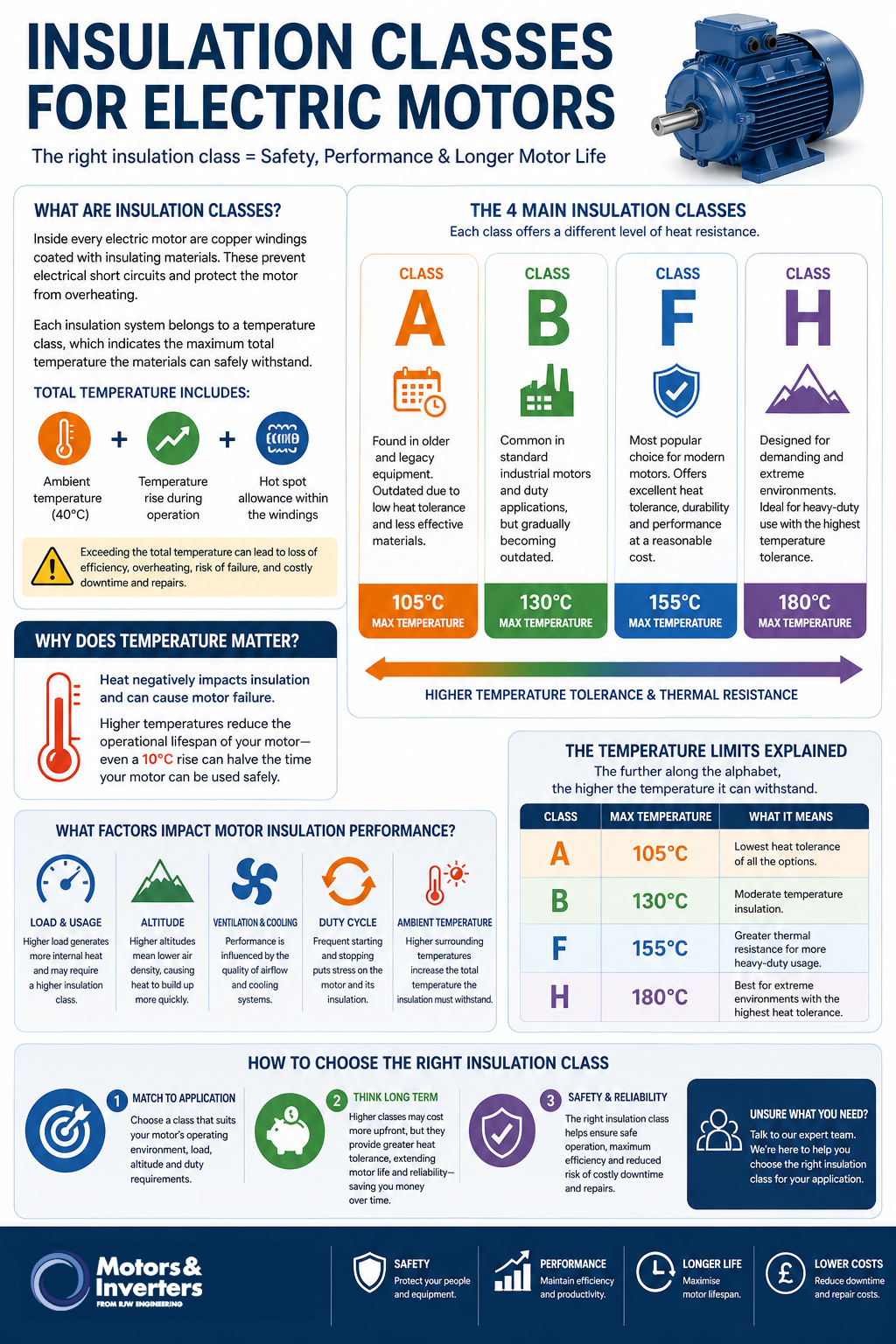
Each insulation system belongs to a specific temperature class, which indicates the maximum total temperature that the insulated materials can carry and safely withstand. The total temperature also includes:
- Ambient temperature (40°C)
- Temperature rise during operation
- Hot spot allowance within the windings (areas that run hotter within the motor)
If the total temperature is exceeded, it can create myriad issues with the motor, including loss of efficiency, overheating, risk of failure, and costly downtime and repairs.
The most common electric motor insulation classes
There are four main electric motor insulation classes that all offer a different level of heat resistance: A, B, F, and H.
Class A electric motor insulation tends to be found in older and Legacy equipment and is widely regarded as outdated due to its low heat tolerance and more effective models.
Class B electric motor insulation is still commonly used in standard industrial Motors and duty applications, although it is gradually becoming outdated by newer, more efficient models.
Class F electrical motor insulation is the most popular choice for modern motors, offering a combination of heat tolerance, durability and performance at a reasonable cost.
Class H electrical motor insulation is designed for use in more demanding environments and suits heavy-duty use due to this model having the highest temperature tolerance and thermal resistance.
Why does temperature matter in electric motors?
Insulation classes matter because temperature matters. The reason is that heat negatively impacts the insulation in electric motors and can cause them to fail. In turn, this means that higher temperatures can reduce the operational lifespan of your electric motor, meaning even a small rise, such as 10 degrees, can halve the time that the electric motor can be used safely.
The temperature limits of each electric motor insulation class
The further along the alphabet, the class of electric motor insulation, the higher the temperature it can withstand:
Class A electric motor insulation has the lowest heat tolerance of all the different options at 105 degrees centigrade.
Class B has a limit of 130 degrees centigrade and so offers moderate temperature insulation.
Class F has a greater thermal resistance and is suitable for more heavy-duty usage at a limit of 155 degrees centigrade.
Class H is the best choice for more extreme environments with an upper limit of 180 degrees centigrade.
What factors impact the performance of electric motor insulation?
Several different factors impact the performance of electric motor insulation. The first of these is the load and usage of the motor. It is important to remember here that the higher the load, the greater the internal generation of heat, and so a higher class of insulation may be required for safety.
The altitude at which you are working will also impact the performance of any electric motor insulation. This is because higher altitudes with reduced air density will cause heat to build up more quickly. In turn, this places greater stress on the insulation, and so a higher class may be required.
Other factors that can affect the motor’s performance include ventilation and cooling (performance is influenced by the quality of air flow), duty cycle (frequency of the motor, starting and stopping can cause stress to the motor), and ambient temperature (if the surrounding temperature is higher than average).
How to choose the right insulation class for your needs
Picking the right insulation class for your electric motor needs can be tricky. However, some rules can help. The first is that you need to match the class to its application, as described above. The second is that even though a higher class of electric motor insulation can be more expensive, by choosing it, you can increase heat tolerance, and so the lifespan and reliability of your electric motor. Both things can save you money over the long term.
If you’re unsure of your requirements, talk to our expert team, who are more than happy to help.
Motor Insulation Classes Infographic