 Call Us: 0800 999 0200
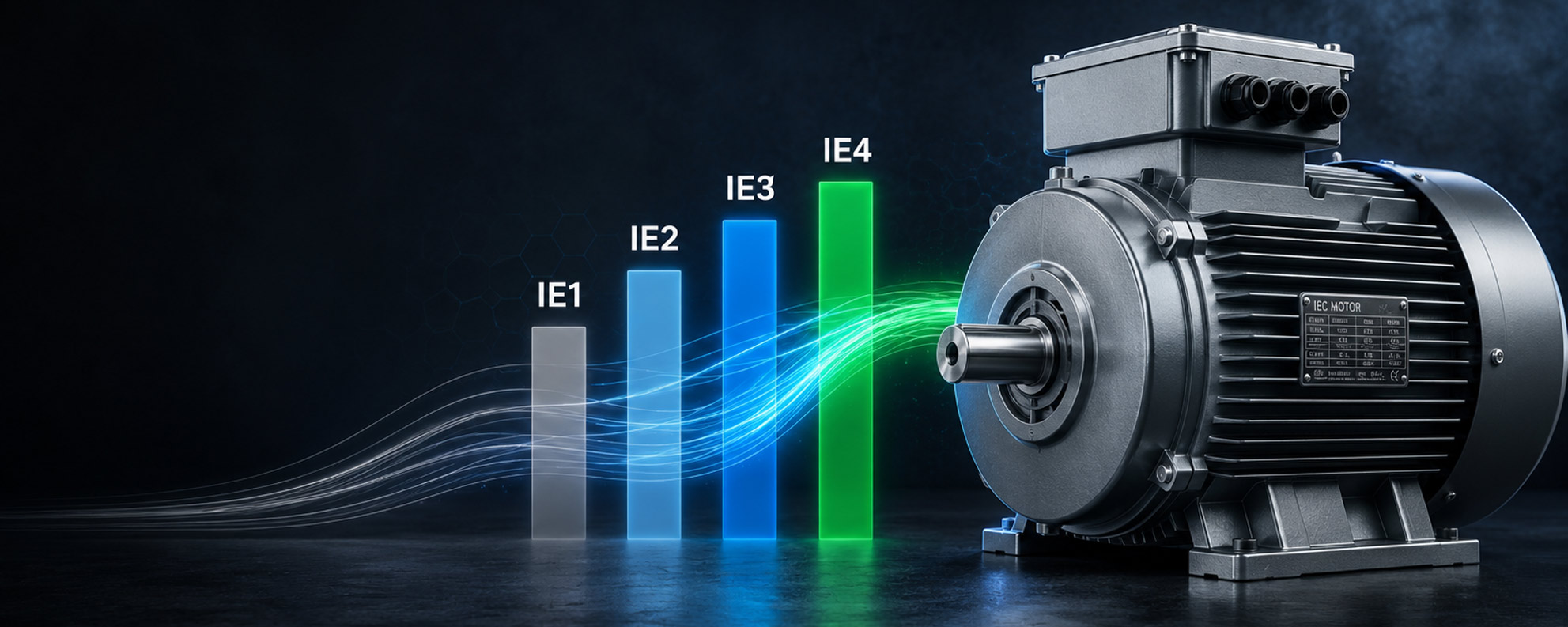
Electric motors are divided into four different efficiency classes: IE1, IE2, IE3, and IE4, with IE1 being the least efficient and IE4 being the most efficient.
With electric motors responsible for a big percentage of an industrial facility’s energy consumption, facility managers and planners must understand the difference in how each motor class affects operational efficiency and running costs. Even minor improvements, such as opting for an IE3 motor over an IE2 motor, can have a noticeable impact.
What Are IE Efficiency Classes?
Established by the International Electrotechnical Commission (IEC), IE efficiency classes serve as the global benchmark for determining the energy consumption and operational efficiency of electric motors. Through standardised testing, electric motors are assigned a class based on their capacity to turn electrical energy into mechanical output, versus what’s lost to heat.
Though the rating is primarily assigned to the electric motor itself, the class has ripple effects that impact other aspects of a facility’s operations, including equipment maintenance, cooling costs, and energy bills.
IE1 vs IE2 vs IE3 vs IE4 Motor Efficiency
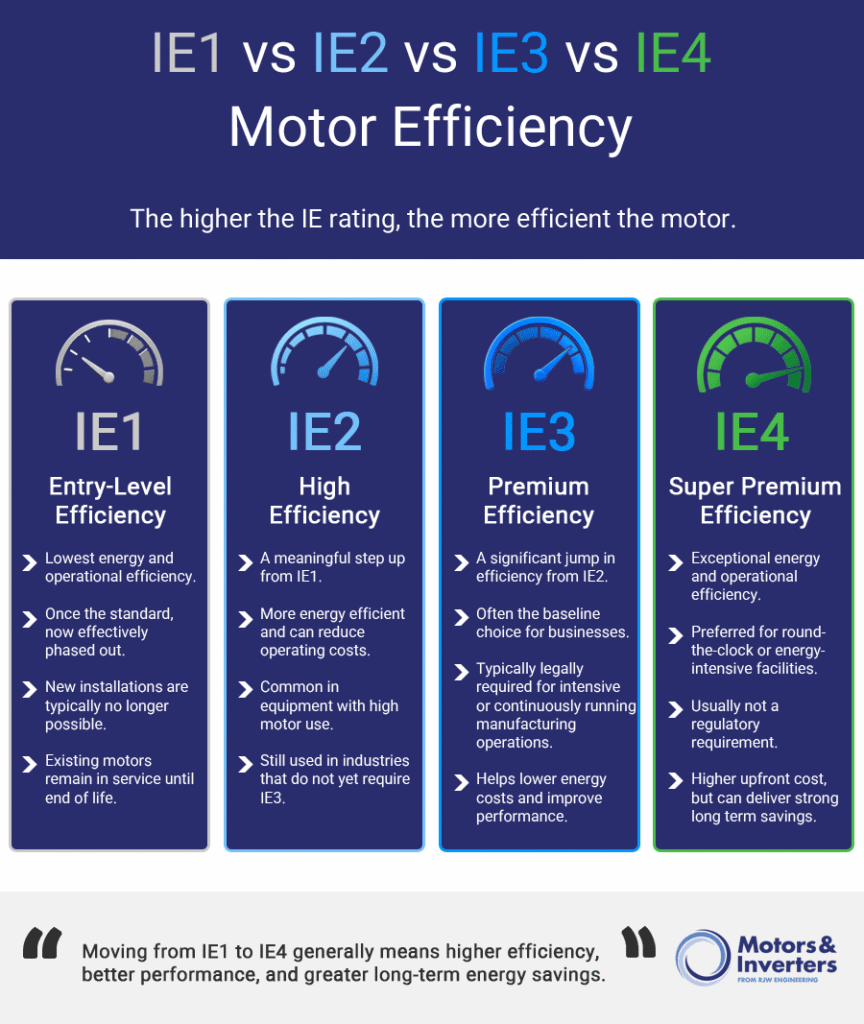
There are four types of IE ratings: IE1, IE2, IE3, and IE4. The higher the rating, the more efficient the motor. Higher class IE ratings benefit from more advanced design and construction, allowing for greater efficiency and performance.
IE1: Entry-Level Efficiency
IE1 is assigned to electric motors with the lowest energy and operational efficiency on the market. While it was once the standard, today it has been superseded by subsequent IE classes and has effectively been phased out. It’s typically no longer possible to install IE1 electric motors, but motors that are currently in use are usually allowed to remain in operation until they reach the end of their lifecycle.
IE2: High Efficiency
IE2 may be the second-lowest IE class rating, but it provides a meaningful step up from IE1. Significantly more energy efficient, IE2 electric motors are typically used in equipment with high motor use, allowing businesses to make considerable energy expense savings. While increasingly outdated, IE2 motors still tend to be the go-to option in industries that don’t yet require IE3 motors.
IE3: Premium Efficiency
IE3 electric motors provide another significant jump forward compared with IE2 electric motors, allowing for even greater energy efficiency.
IE3 electric motors are typically legally required for all power-intensive or continually running manufacturing operations in the UK, Europe, and across the world. Though they’re the baseline option for many businesses, not an upgrade option, they provide significant energy savings and operational improvements, helping businesses to cut down on their energy costs while also improving performance.
IE4: Super Premium Efficiency
IE4 sits at the top of the IE efficiency class list, providing unparalleled energy and operational efficiency. Though they’re usually not a regulatory requirement, IE4 electric motors are the preferred option for facilities that run round-the-clock or energy-intensive operations. They’re the most expensive type of electric motor on the list, but their capacity to minimise energy-related expenses can make them a worthwhile investment for manufacturing and industrial facilities that want to keep their energy costs as low as possible.
Why Efficiency Class Matters
Electric motors are the driving force behind many industrial and manufacturing operations, but they’re not all created equal. While it may be the secondary factor behind performance, it’s important to pay attention to the motor’s efficiency class. That, after all, will play an influential role in determining the energy implications and overall function of the equipment.
For operations that run continuously or near-continuously, even small improvements to the efficiency of an electric motor can result in significant energy savings. In addition, in some regions or industries, regulatory frameworks demand a minimum efficiency class for electric motors, or will do so in the future. Plus, higher-rated electric motors typically tend to provide improved performance, too.
By ensuring you’re choosing the right IE-rated electric motor for your needs, you can benefit from:
- Lower energy costs
- Regulatory compliance
- Enhanced environmental reporting
- Improved performance
FAQ
What Does IE Stand For In Electric Motors?
IE stands for International Efficiency. It refers to the standardised rating that the International Electrotechnical Commission (IEC) assigns to all electric motors.
How Should I Choose IE Class?
You can choose an IE class for your electric motor by considering:
- Runtime (low-use vs. constant)
- Industry/regional regulations
- How energy efficient the electric motor must be
What Is the Difference Between IE3 and IE4 Motors?
Made using superior design principles and high-end materials, IE4 motors are more energy efficient than IE3 motors. Although IE3 motors are energy efficient and have a wide range of applications.
What Is the Difference Between IE2 and IE3 Motors?
IE3 motors are much more energy efficient than IE2 motors. IE2 motors, while still in use, are increasingly becoming a legacy or budget option.


