 Call Us: 0800 999 0200
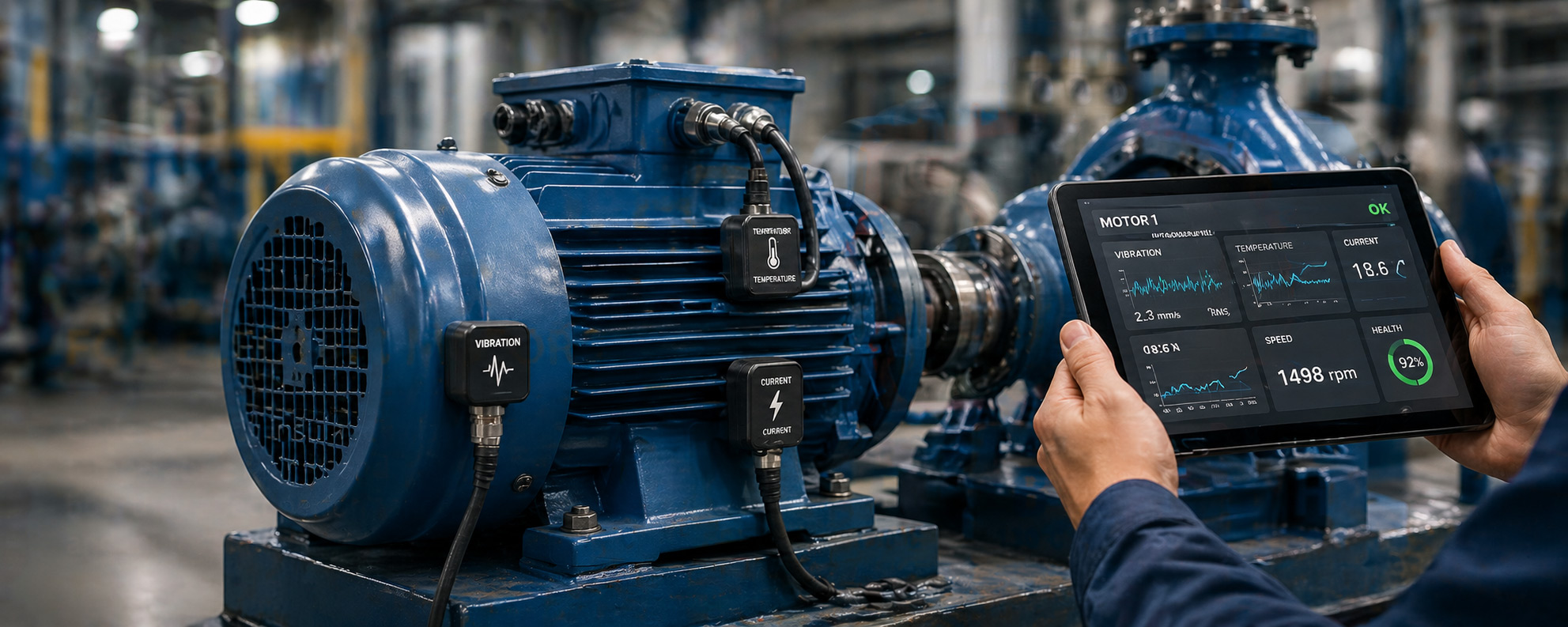
Condition monitoring is a smart, time-saving, and proactive way to take care of machinery and equipment. Instead of fixing machinery after it’s broken or waiting for its scheduled service, condition monitoring focuses on how the equipment is performing day-to-day to identify any potential breakdowns and repairs.
By tracking any changes in vibration, pressure, temperature, electrical signals and other indicators, engineers can detect any warning signs by observing the equipment in real-time, giving them time to address and solve the problem before it becomes a real issue.
Understanding The Basics
At its core, conditioning monitoring is about observing the health of the machine whilst it’s in operation. The main goal is to spot any inconsistencies, irregularities or unusual patterns that indicate wear, misalignment, contamination, overheating or any other developing faults.
Typically, maintenance falls into two main categories:
Reactive Maintenance – to fix equipment after it breaks
Preventive Maintenance – to service equipment at planned intervals, such as a 6-month service.
Both approaches, although effective at solving repairs, have their drawbacks. Reactive maintenance can lead to unplanned downtime (meaning the machine is out of service), lost/missed production, and costly last-minute repairs. Preventive maintenance is more reliable; however, it can be inefficient, with parts being replaced too early or left to worsen.
Condition monitoring offers a safer middle ground, bridging the need for machinery to be observed for any faults, and then repairing it in due time to avoid any downtime or unnecessary cost to the business. In order to regularly and correctly keep check on machinery, condition monitoring uses real-time data to decide what’s needed.
How Condition Monitoring Works
Condition monitoring primarily relies on three components:
- Sensors
- Data collection systems
- Analysis software
These three components work together to gather accurate data about the machinery. The sensors are installed on or near equipment to measure key operating parameters. They then collect data (via data collection systems) continuously or in regular intervals, which is then processed by the analysis software. The software will flag any inconsistencies in the data pertaining to the regular operation of the machinery.
For example, if something is drifting outside of the normal range – say vibration levels gradually increase over time – the system will generate an alert that would require a maintenance team to come out and investigate the issue before it escalates into a failure.
Common Techniques Used in Condition Monitoring
Due to the wide variety of machines and equipment used, there are a multitude of ways that condition monitoring is carried out. Below are just a few examples of the most widely used methods for condition monitoring.
Vibration Analysis
Vibration analysis is one of the most widely used condition monitoring techniques, keeping check on rotating equipment that produces vibrations, such as motors, pumps, turbines, and compressors. Changes in the vibration and amplitude will be picked up by the sensors and typically indicate mechanical problems, such as an imbalance, misalignment, bearing weight, or mechanical looseness. By analysing the vibrational signature, engineers can pinpoint specific faults long before they become a larger issue.
Infrared Thermography
Infrared thermography uses a set of thermal cameras to observe and detect any temperature changes across equipment surfaces. When abnormal heat patterns occur, it can indicate issues such as electrical resistance, excessive friction, or insulation problems. This method of condition monitoring is praised for its non-invasive nature, and instead simply spectating the heat differences of the machinery to determine if any potential issues are occurring.
Lubricant (Oil) Analysis
Lubricant analysis involves testing oil or grease samples from machinery. Over time, contaminants can accumulate in the lubricant, leaving behind small shards of metal or other materials that gradually taint the quality of the oil or grease. By analysing the chemical composition and particle content, engineers can identify internal component wear, contamination from dirt or water, or the degradation of the lubricant itself. This technique is particularly valuable for assessing gearboxes, engines and hydraulic systems.
Motor Current Analysis
Ultrasound monitoring detects high-frequency sound waves produced by friction, electrical discharge or fluid leaks, and is effective at detecting air or gas leaks, steam trap failures, electrical arcing and early-stage bearing faults. Due to ultrasonic signals typically occurring before other faults appear, this method is particularly efficient at identifying any mechanical issues considerably earlier than other condition monitoring methods.
The Benefits of Condition Monitoring
Over the last decade, there has been a gradual increase in the number of businesses investing in condition monitoring techniques. With the opportunity to decrease machinery down time, avoid large, last-minute costs for machine repairs, and keep production ticking along nicely, condition monitoring is proving to be a valuable asset for many companies in a multitude of ways.
Lower Maintenance Costs
Condition monitoring means that maintenance is performed only when needed, so companies can avoid overspending on scheduled services or paying for larger, more sudden breakdown repairs.
Longer Equipment Life
When machines are properly monitored and taken care of, they’re far more likely to last longer. By addressing repairs and issues early and taking immediate action, the machinery will operate closer to its real condition.
Improved Safety
Sudden mechanical and electrical failures can pose serious safety risks to staff and other equipment, so when issues are detected early, it also decreases the chances of any machinery experiencing a catastrophic failure.
Reduced Unplanned Downtime
Unexpected failures can disrupt supply chains, halt production lines, and damage a business’s reputation. By identifying problems early, condition monitoring can significantly reduce the chance of a sudden breakdown.
Better Resource Planning
Instead of reacting to emergencies, resource and repair teams can plan their workload more efficiently, where they can prioritise tasks based on the equipment criticality and risk.
Conclusion
In essence, condition monitoring is about streamlining maintenance, repairs, and workload. By consistently observing how equipment and machinery behave based on real-time performance data, businesses can avoid costly breakdowns, extend the machinery’s life, and operate far more efficiently.


