
Three Phase Inverters
Our reliable and robust 3 phase inverters are particularly useful for industrial applications that require precise control of speed and torque with motors. We specialise in inverter drive sales for industrial and commercial settings, where a 3 phase inverter is required to control the speed of an electric motor. Our range of 3 phase inverters are rated IP66, which is important if you are looking for a weatherproof inverter – IP66 means that the enclosure is able to protect against powerful water jets. Our inverter drive sales team can help with any questions you have about three phase inverters, or you can browse our range below. All our 3 phase inverters for electric motors are available with fast dispatch, free shipping and 30-day returns. If you aren’t sure on anything you can get in touch with our specialist team and we’ll be able to help.
-
Budget
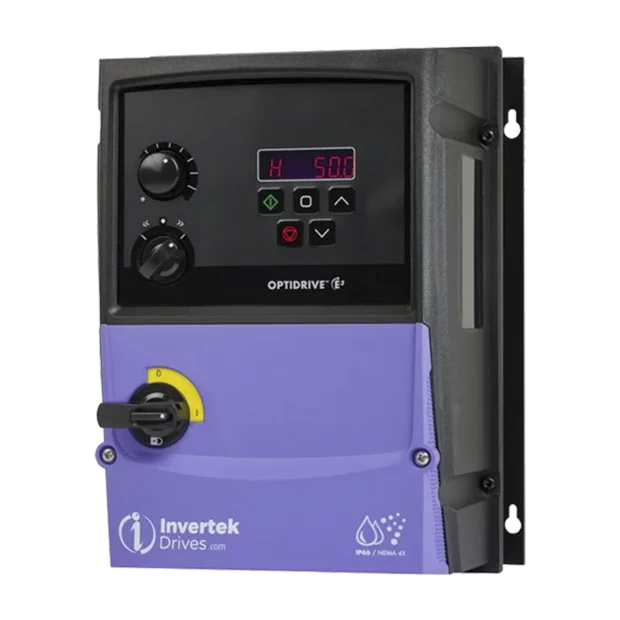
Invertek Optidrive E3 Three Phase Inverter
Price range: £209.63 through £1,416.40 ex. VAT

Frequently Asked Questions
What is a 3-phase inverter?
Three-phase inverters convert 400V industrial mains into variable frequency output, controlling motor speed from zero to full rated RPM. Invertek's Optidrive E3 and Commander C200 handle everything from 0.75kW upwards.
Built-in EMC filters prevent electrical interference whilst dedicated pump, fan, and industrial modes optimise different applications. IP66 versions mount directly on machines; IP20 units fit inside control panels.
Single-phase vs three-phase inverters: what separates them?
Input power defines the split — three-phase needs a 400V industrial supply, whilst single-phase runs on 230V domestic circuits. Three-phase delivers superior efficiency and handles much larger motors.
Output remains matched to input type, so three-phase inverters only drive three-phase motors. Greater complexity brings better performance, with industrial applications almost exclusively using three-phase systems.
Choosing the right three-phase inverter: where do I start?
Motor nameplate data comes first: verify kW rating, voltage, and current requirements. Your Optidrive E3 must equal or exceed motor ratings - undersizing your inverter could cause overheating and trips.
Application type determines control features needed, whilst environment dictates protection level. Rising clamp terminals speed installation; coated heatsinks resist corrosion in harsh conditions like food processing plants.
Can I use a three-phase inverter in a single-phase system?
No — aside from being dangerous and unrealistic to install due to incompatibilities in infrastructure, three-phase inverters require all three phases to operate correctly, and any missing phases will trigger protection circuits.
Phase converters exist, but these add cost and complexity whilst reducing reliability. Better to select appropriate single-phase equipment or upgrade your electrical supply to a proper three-phase.
Three-phase inverter maintenance: what's essential?
Check terminal tightness annually as vibration loosens connections over time. Keep cooling vents clear - blocked airflow causes premature failure in even the best drives.
Monitor for error codes or unusual operating sounds that indicate developing problems, clean external surfaces with dry compressed air, and never use liquids that might penetrate the enclosure.
How long will a three-phase inverter last?
Quality drives from established manufacturers like Invertek deliver years of reliable service when properly sized and installed. Operating temperature affects longevity most; cool running extends life significantly.
Where can I purchase high-quality three-phase inverters?
RJW Motors and Inverters supply both Invertek Optidrive E3 and Commander C200 three-phase ranges. Their technical team provides sizing assistance on 0800 999 0200.
Email sales@rjweng.com with your application details for prompt quotations and stock availability.


